

Prince William County Just Changed the Rules for Data Centers — What Happens Next?

For years, Prince William County has been one of Northern Virginia’s fastest-growing data-center markets. Massive windowless buildings, electrical substations and new infrastructure have become increasingly visible around Manassas, Gainesville, Bristow and other parts of the county. Now, Prince William County has made one of its biggest changes yet to how future data centers can be developed.

On September 22, 2026, the Prince William County Board of County Supervisors unanimously approved changes that dramatically reduce the area where qualifying data centers can be developed by right—meaning without going through the full Special Use Permit process. (Patch) And the numbers are significant.
From Nearly 9,700 Acres to About 3,650
The county's Data Center Opportunity Zone Overlay District previously encompassed approximately 9,700 acres. Under the revised boundaries, that drops to roughly 3,650 acres, cutting the land potentially eligible for by-right development by about 62%. (Bisnow)

That's more than 6,000 acres removed from the overlay. The county also says the revised overlay is closed to future expansion. Properties that remain inside and meet specified eligibility requirements can retain by-right development permissions, while the rules change substantially outside the boundary. (Prince William County Government)
BEFORE
~9,700 acres
NOW
~3,650 acres
CHANGE
~62% reduction
That doesn't mean data centers can no longer be built on all of the removed land. Instead, most new proposals outside the overlay in eligible zoning districts will have to pursue a Special Use Permit (SUP). That brings individual projects through a public review and approval process rather than giving them an automatic by-right path. (Prince William County Government)
Why Prince William County Is Making This Change
Prince William County originally established its Data Center Opportunity Zone to identify locations where data centers could be developed under specific zoning rules.
But the industry's expansion has become a major land-use issue across Northern Virginia.

Prince William's latest amendment fundamentally restructures that approach. According to the county, its purpose is to reduce and redefine the overlay, preserve certain existing development rights and make the Special Use Permit process the primary route for new data centers outside the remaining zone. (Prince William County Government)
The county has also developed an interactive data-center map allowing residents to see projects that are proposed, approved, under construction or completed, including information such as acreage, planned square footage and zoning. (Prince William County Government)
This Could Change the Development Map
The biggest real-estate question may be what happens to land that no longer enjoys the same by-right pathway. The change doesn't automatically convert those properties into housing, retail or mixed-use developments. Existing zoning, comprehensive-plan designations, infrastructure capacity and future land-use applications will still determine what can ultimately happen on individual parcels.

But developers considering a new data center outside the remaining overlay now face a substantially different approval process. That makes future battles over individual properties—and competing uses for valuable land—something worth watching closely.
Prince William Is Already a Major Data-Center Hub
This isn't happening in an area with only a handful of facilities. Prince William County already has a substantial concentration of data centers, particularly around the Manassas area and major transportation and power corridors.
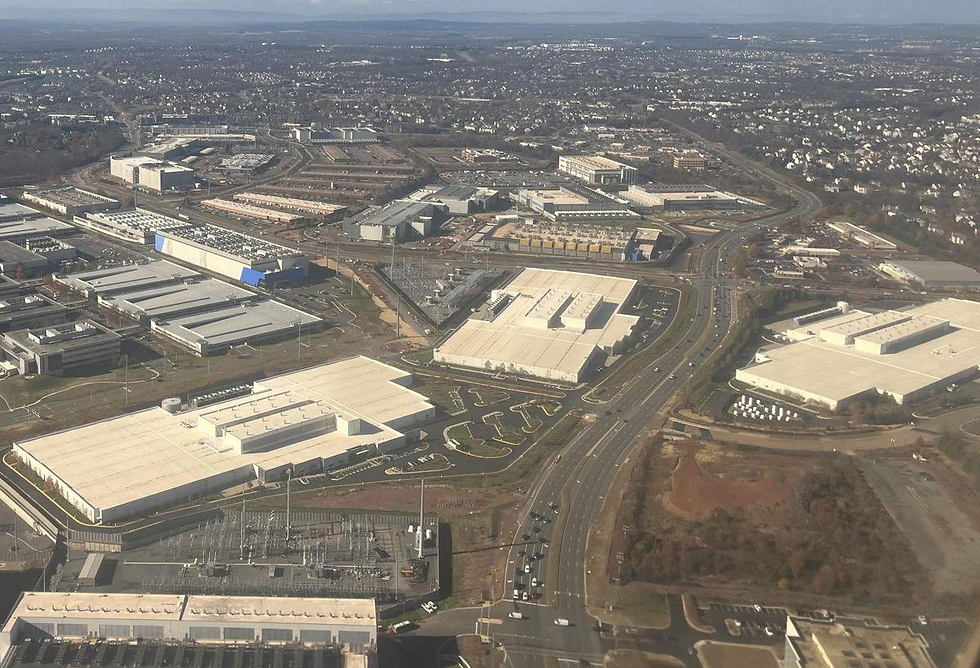
The county even launched a dedicated interactive mapping system in February 2026 because of growing public interest in understanding exactly where projects are located and what stage of development they have reached. (Prince William County Government)
Northern Virginia more broadly remains one of the world's most important concentrations of digital infrastructure, making local land-use decisions especially consequential for developers, utilities, residents and property owners.
What Does This Mean for Homeowners?
The immediate answer is: it depends heavily on location. This vote does not mean thousands of acres will suddenly become residential communities, nor does it establish that nearby home values will rise or fall. What it does change is the approval process.
For many future data-center proposals outside the remaining overlay, residents will have more opportunity to see and participate in the public land-use process before a project receives approval. (Prince William County Government)
That could make development proposals involving land near residential communities especially important to follow.
And There's Another Important Detail: The 90-Day Transition
The Board approved a 90-day transition period for certain properties already within the overlay rather than the 120 days previously recommended by the Planning Commission.
That provision could matter because qualifying projects may seek to preserve existing development rights during the transition period. (Patch)
So while the September 22 vote represents a major policy shift, the effects won't necessarily appear overnight.
The Bigger Northern Virginia Story
Prince William isn't making land-use decisions in isolation. Data-center development has become one of Northern Virginia's defining growth issues as communities weigh economic development against questions involving power infrastructure, land use, environmental impacts and proximity to homes.
Prince William County's decision represents a notable shift from simply identifying large areas for by-right development toward reviewing more projects individually.
And that leads to the question that could matter most for the county's future real-estate landscape:
If thousands of acres are no longer inside the by-right data-center overlay, what will ultimately happen to that land?
Some properties may still become data centers through the SUP process. Others could remain in their existing uses or eventually be proposed for something entirely different.
Either way, Prince William County's development map just changed.
Follow DMV Homes
I cover the biggest development, transportation, housing and redevelopment projects transforming Northern Virginia, Maryland and Washington, DC.
From new communities and transit-oriented development to major infrastructure projects and neighborhood transformations, follow along to see what's being built next—and how it could affect the DMV real-estate market.
DMV Homes
📞 703-439-4971
What do you think: Is requiring public review for more data-center projects the right approach for Prince William County?
Note: Development regulations and individual project statuses can change. Readers considering a particular property should review the latest county zoning and land-use records.


Comments